Foraging at the End of the World
“Would it be possible to survive societal collapse in the UK through foraging alone?”
This is a question I am occasionally asked on my courses. Most people come along because of a general interest in wild food and medicine, and I am sure that there are some closeted preppers amongst them, but occasionally someone attends a course who is out and out preparing for the end of the world, and I thoroughly sympathise with their motives.
Because of course, why wouldn’t you learn to live off the land in the event that access to shop-bought food is suddenly cut off?
For many years the general attitude of the British public has been one of ire and ridicule towards people preparing for disaster. The words “crack-pot” and “paranoid” often follow the word “prepper”, but in the past few years especially, there appears to have been a shift in the general public consciousness that something bad could happen. First covid, then the Russia/Ukraine war, then the rise of AI, then the Iran war, then the overly hot summers and subsequent wild fires across Europe. Large scale threats to human existence seem to be metastasising by the day, there is no longer a singular threat at any one time, but many of them growing and spreading and merging.
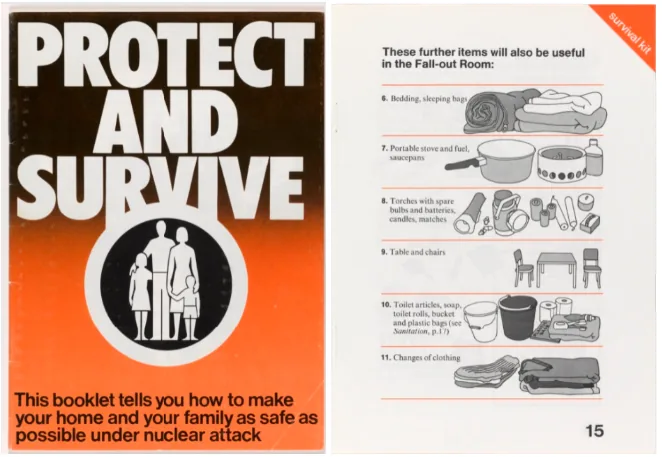
Even our own government, who have waged bureaucratic war against self sufficiency for years, have suddenly changed course and are issuing guidance for people to prepare in case of supply chain disruption. Fleshy government automaton Wes Streeting recently issued advice that the public should begin to stock up on food and water in the case of extreme weather, war or a cyberattack. The government has even gone as far as to release a “Be Ready” checklist, a sort of stripped back, charmless Canva-fied version of the 1976 British issue Protect and Survive booklet.
With the threat of cyberattack larger than the ongoing PHP catastrophe (at time of writing), an attack (conventional or otherwise) by a state actor, a fertiliser shortage thanks to the blockage of the strait of Hormuz and the promised “super El Nino” which may precipitate further floods, droughts and crop failures across the planet, I can’t say I have a great sense of optimism for what 2027 threatens to bring on a global scale. We can only hope the “nothing ever happens” camp continues to be correct in their predictions and we avoid all of the above.
But in the face of this we reach the question. What if something happens?
“I can’t/won’t/didn’t prepare in advance and shit has royally hit the fan. Could I survive by foraging in the UK if all the shops ran out of food?”
Let’s explore the eventuality.
About 500,000 years ago, the first early humans settled in Britain, and made a living by scavenging, then subsequently gathering and hunting in a country with terrain that swung from dense forest to frozen tundra through the ages. During the Paleolithic the entire population of our island was likely in the low thousands, only reaching about 10,000 people in the Mesolithic period (stone-age) 490,000 years later. Our ancestors throughout this vast period of pre-history were certainly not vegan, and relied on the fat of the animals they gathered as a source of energy due to the inherent lack of carbohydrate-containing plants growing here. It was only around 5000 BC that agriculture made it to our shores, and our populations became more settled, switching to an increasingly carb-based diet as exotic grains like wheat and rye migrated with farmers from the fertile crescent in the middle east.
Fast forward to today. We are one of the least forested countries in Europe and our government has managed to cram a rapidly increasing population of 69 million people onto a comparatively small island with dwindling natural resources. The population of London (9.12 million people) alone is greater than that of the entirety of New Zealand (5.3 million). Every day it seems a developer is building something new on fields that could grow our food or cutting down a woodland to do the same. Agriculturally speaking, we already cannot feed our entire population without importing food from abroad. I wonder, in the case of a future world war, if a “Dig for Britain” style campaign could even work to feed the country, when so many millions are crammed into urban centres with no access to fertile ground to grow food. Surely no amount of redistribution from suburban and rural gardens could possibly feed that many mouths, even when combined with farm produce?
Given how hard the past few years have been on British farmers and their crops, we must also factor in a diminished return from grown produce if the trend of extreme weather is due to continue. Crop failures on large-scale farms and garden allotments will also impact the availability of grown food. I have seen it this year in the farm fields nearby, and in the fruit and vegetables my friends, family and myself have attempted to grow. Almost all of my plants not receiving daily irrigation in summer ‘26 have been hit hard, if they haven’t perished entirely.
Weather is one factor, access to surplus water is another, knowledge of how to grow enough food to feed your family is something that has been lost to most over the generations, without factoring in the space and fertiliser needed to grow that much food per household, without also considering the defensibility of your produce. If your lovely thriving vegetable garden is visible to your hungry neighbours, those vegetables are unlikely to remain yours for very long…
In the scenario of a total collapse, where there is a complete breakdown in our supply chains and no new food or medicine appears in the supermarkets after X date, I have strong doubts that living off the land would be a realistic long-term strategy.
We may be forced to return to the methods of the hunter-gatherer, without the means to succeed at them. To live off the land, alongside our other complex nutritional needs, we either require a source of fat or carbohydrate in order to give the body energy to continue working. In the event of societal breakdown, food shortages and crop failures, where would we source our carbs and fat from?
“I would hunt!” Some people instantly proclaim.
I would give it perhaps a couple of months before every field is stripped of livestock as increasingly desperate people turn to poaching and theft to feed themselves. As for hunting wild game, most modern Britons have never handled a firearm (even a bow, once a tool that every man on the island was trained to use), let alone own one or are practiced enough to use it competently. Most have never trapped or snared anything either. Opportunities to hunt will be rare, the skill to do so, even scarcer. On an island of 69 million, I wonder how quickly the easiest prey would be consumed at an unsustainable rate. As a result of this our most common sources of dietary fat such as dairy would also become a rarity.
Fishing is certainly another option, and one that I can’t make too much comment on due to my own current lack of expertise in the field. We can assume that sea fishing would perhaps be more lucrative than river fishing, but likely requires more expertise and equipment to do so. Perhaps with our collapse scenario in question, we may see a return of quality fish stocks to British rivers due to polluting industries ceasing to function effectively. Alternatively stocks may continue to decline.
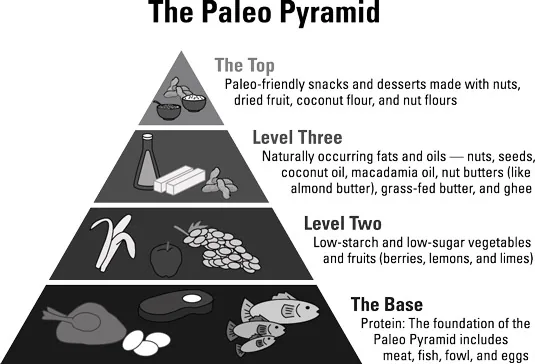
As for naturally occurring carbohydrates, there are few that grow in Britain (I am also working on the assumption that anyone discovering self-seeding grains in abandoned farm fields will lack the threshing equipment to process significant amounts of it.). Nuts, seeds and roots may have formed a good portion of the fat, carbs and fibre consumed by our ancestors, but these were supplemented by meat. Our wild carbohydrate roots include things like dandelion, hogweed, lesser celandine and bulrush. Compared to flour milled from grain, these have poor edibility and need to be harvested in great quantities. Arum Maculatum root presents an option, but a reliable method of safe processing remains allusive. The wild spaces where our energy-rich forageables grow are so diminished that even one person would be lucky enough to find a sufficient quantity to sustain themselves for a week. When was the last time you came across a grove of walnut trees with enough yield to feed a village?
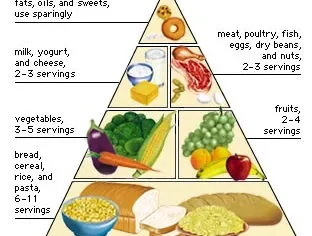
Obtaining sources of vitamins and minerals, A, B, C, iron, magnesium etc. would likely be slightly easier, due to the number of nutritious and commonly occurring wild plants that contain such compounds. Nettles, sorrel, dandelion leaves and other “spring greens” could provide nutrition of this variety, but again, consider the quantity of these plants needed to sustain one person for a year, and multiply that by 69 million. This of course assumes that at least a good proportion of our population knows how to forage, which they don’t, but in the event of steady collapse I can certainly see viral social media content focusing on “free food” encouraging a horde of desperate people to go and ransack the woods for spring nettles. We saw it during covid with the toilet paper panic, all it takes is one domino to fall and trigger a rush.
I hold the sincere belief that people will be making Tiktoks and reels until the power grid cuts out for the final time and they are left alone in the darkness and silence of the real world.
The apocalypse survivor next faces the challenge of preserving foraged or grown produce. Collecting enough nettle to sustain the protein and iron intake for you and your family for an entire year is one thing, next is the challenge of storing it in a way that it remains preserved and nutritious through the months of scarcity (usually winter, but during our increasingly harsh summers I am seeing far less fresh greenery to harvest. Summer 2026 left many of my sites barren of anything that wasn’t dried seeds). Do you have enough freezer space to preserve enough foraged goods to last months? Do you have enough jars to can or ferment those foods? Do you have the means to dehydrate and store those foods? How many people do? This again presents a significant challenge to anyone in Britain thinking they could “live off the land” in the event of a collapse.
The outlook here looks starkly gloomy. And it is. We simply don’t have the remaining wild space to feed even a mid-sized community on foraging alone. Paired with agriculturally grown or preserved food, we may use wild plants to supplement some shortfalls in diet, but to rely entirely on the wild would not be feasible outside of a rapture-like scenario where most of our population simply disappeared overnight.
The extreme weather we have experienced of late is also significantly impacting our native flora and fauna. Our cold loving trees like the Beech are being affected by the hot dry summers, if these continue, we may be saying goodbye to the Beech and its associated species in the next 30 years. As I mentioned earlier, my foraging of leafy greens this year has been totally limited to spring and autumn, as the summer effectively nuked everything into total submission. Luckily most of my local trees have bounced back, and berry season, albeit early, was good. But how many more years of shock can these plants take? If every year is hot, more trees die, fewer saplings survive to maturity, there is less shade and less moisture in the soil, are we seeing the start of a self-perpetuating doom-loop? I don’t want to look too deeply into the answer. In an event such as this, relying on foraging for food would become more difficult still.
The main area I see post-collapse foraging being useful is not so much in the larder, but instead in the medicine cabinet. If modern pharmaceuticals ceased to appear on the shelves, outside of scavenging for old stock, we would have no choice but to return to herbal remedies and folk medicine to treat illness, wounds and infection.
Wild medicine can be collected in small quantities, sustainably, and will last a household for a year easily, when used to treat common ailments. Anti-scorbutic plants like dandelion and sorrel are hardy and grow easily; anti-microbial plants like yarrow and plantain are equally ubiquitous, grow in poor soil and are extremely hardy. These are some of the few plants that remained green this summer after the grass died back and the hedgerows turned to matchsticks.
I keep an apothecary’s cabinet of various dried herbs and plants that are capable of replicating the general purpose medicinal cabinet of the average British household: replacing paracetamol with meadowsweet, pineapple weed or willow bark; gaviscone with yarrow, birch polypore, mugwort or mint; antiseptic healing cream with yarrow, plantain and hedge-woundwort ointment. As you learn more about herbal medicine, you may be able to become more self-sufficient in your ability to treat some basic ailments. The Elder tree has been a great friend to humanity for thousands of years, providing a number of medicinal applications for all parts of the plant. I can certainly see it being useful to keep coughs and colds away in the winter months.
That said, the herbal apothecary has its limits. For example, I sustained a nasty second degree burn earlier this year, which I begrudgingly had to attend A&E for (a total of 5 times as it turned out). Without modern medical intervention, the recovery would have been a far riskier and longer process, as it relied on minor surgery and some miracle dressing called UrgoClean to remove the wound slough and maintain healing without it becoming infected. How many amongst us have the ability or knowledge to treat a serious injury at home with modern means, let alone with access to only common weeds as a substitute?
By now, I’m sure you can see the point I have laboured:
Our population cannot survive off foraged food and medicine alone if the world ended or if society collapsed. Single individuals would struggle to feed themselves on a normal day, let alone when whole families and communities need to rely on what’s growing .
Foraging can be used as a supplementary practice to add some diversity to a limited diet of foods obtained by other means.
For anyone who is preparedness-minded, foraging is certainly an excellent tool to have on your belt in case of things going wrong on a smaller scale. I’ve been caught out in the wild with bad bug bites and known to use plantains to use to reduce the swelling, had an eye infection whilst hiking and used a warm yarrow compress to clear the infection, or added nettles and sorrel to my pot of instant noodles for a bit of extra nutrition. If the supermarkets run out of salad or fruit for a week, you’ll do well! But to rely on it whole-scale in the event of a total collapse of our supply chains is unlikely to be a successful strategy in our modern nature-depleted, overcrowded little island.
As I said at the beginning, I pray that the “nothing ever happens” philosophy applies directly to the topics discussed here, and we return to a peaceful, stable world where the British summers are mild and a bit wet.
I try to keep my writing predominantly positive, but over the past year, existential questions like this have been on the minds of many including myself.
In the meantime…