

28 Years Later & The Bone Temple: An Examination of Folk-Horror and Hauntology
Giants, Celtic-head hunters, neolithic funerary rites, Merlin, Hauntology and Devilish superstition. Here I explore how these themes come together in the 28 Years Later Duology to create some excellent folk-horror.
When it was announced that the original creators of 28 Days Later had reunited for a sequel, I felt a mix of excitement and trepidation. 28 Days has been in my top 5 films of all time since I first watched it as a teenager, 28 Weeks was an exciting action/horror romp (especially to a zombie-obsessed 15 year old) but fails to hold up as well as its predecessor due to strange character motivations and an overwhelming sense of Americanization (spelt with a zee to really drive that word home).
This article contains major spoilers for 28YL and The Bone Temple
So what were Danny Boyle and Alex Garland going to pull out of the bag for their true sequel? And why am I writing about any of this on my nature/folklore blog?
Messrs Boyle and Garland grabbed the wheel and twisted it in a direction that very few people suspected, and instead of leading us into a gloomy, drab, 28 year post-apocalypse a la The Walking Dead, the duo leant on the concept that time is cyclical, bringing us instead to the misty isle of ancient-future Albion, where hauntological remnants of Britain’s past find themselves woven into a modern narrative about an island people left for dead. The beautiful colour palette and natural scenery are juxtaposed against the horrors of what lurks in the trees, fields and crumbling ruins. The 28YL films are unashamed to make very bold gambles with elements that do not usually appear in big-screen horror.
No wonder general audiences HATED the concept…
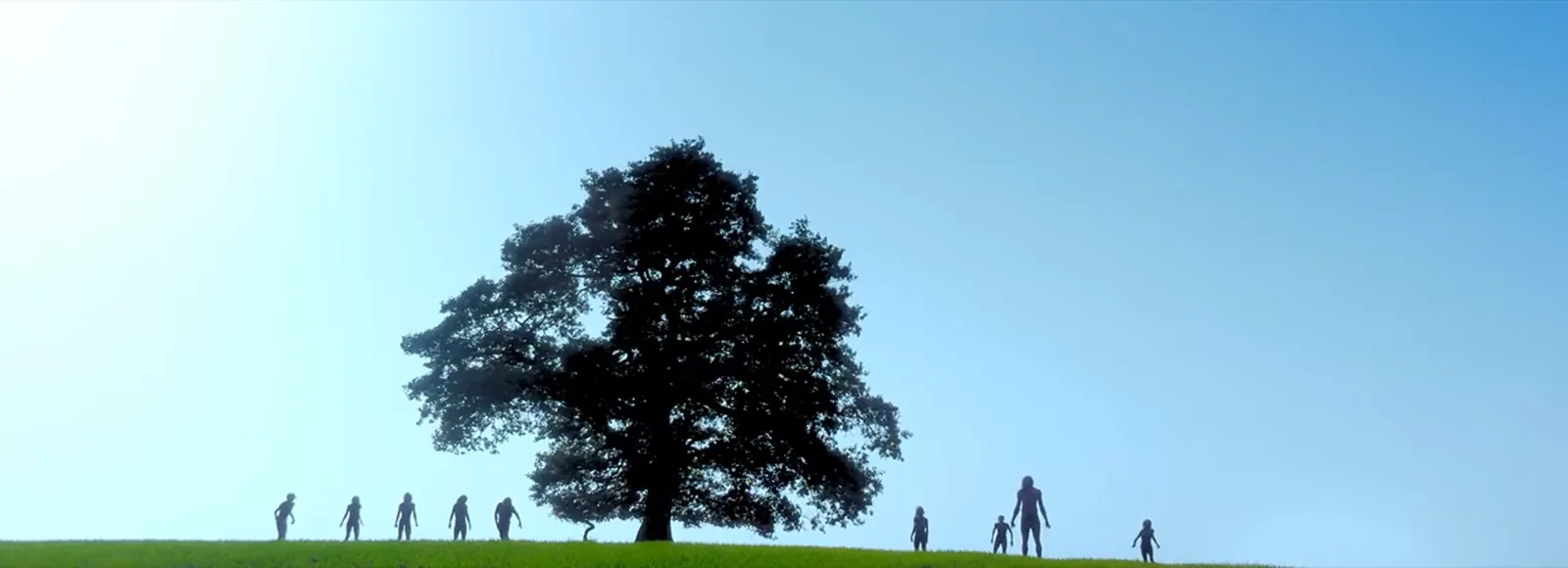
I, and others like me however, were massively relieved to find out that the film wasn’t a cynical cash-grab. We were instead delighted by a uniquely mythic, BRITISH feeling horror film with some extremely off-the-wall, dream-like directing and editing choices, accompanied by an immense score composed by Young Fathers. 28 Years Later feels like art that everyone involved cared about, and that’s why I love it.
When the Bone Temple hit the big screen only a few months later, I was surprised to see how Nia DaCosta, an American, managed to carry on Garland’s script and even include some other UK regional accents amongst the new cast. It didn’t feel as heavily British in its DNA, I did miss Boyle’s wacky directing and the Young Fathers score in part 2, but it was certainly a strong follow-up.
28 Years Later especially is packed with themes, both visual and narrative, that draw from Britain’s rich history of myth, legend and ritual. Here be films packed with giants, monsters, death rituals and superstition, set in some of the most stunningly beautiful parts of the British countryside. In this piece I would like to delve deeper into some of the lesser-discussed influences I have noticed upon multiple watches, that, in my opinion, makes these films worthy of the genre “folk horror”, and bloody good folk horror at that.
N.B. I use the term hauntological a fair few times in this article, for the unacquainted, it means: a range of ideas referring to the return or persistence of elements from the social or cultural past, as if to haunt the present.
The Holy Island, archers and vikings
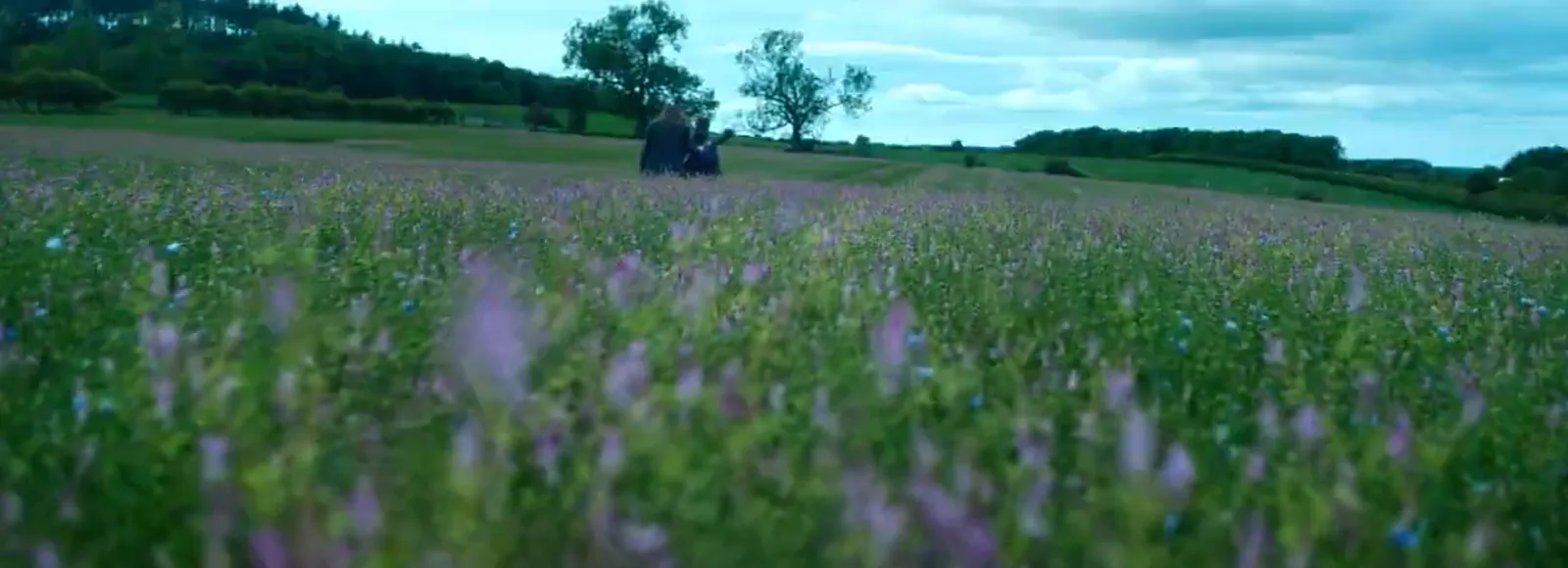
This is a topic which I shan’t give too much attention to, on account of it being the most obvious and discussed part of the historical symbolism present within 28YL, but it deserves mention nonetheless. The Holy Island setting where we first meet our wider cast is the first reveal that we are in for an “Olde English” apocalypse.
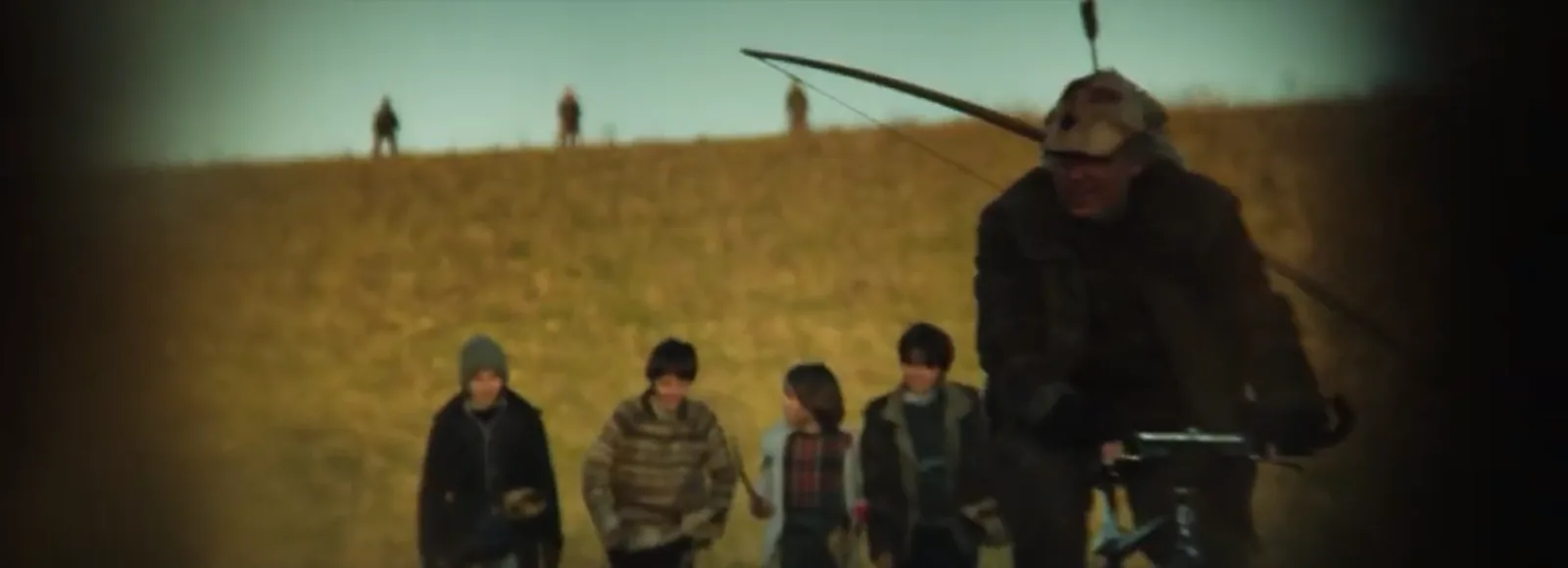
Lindisfarne/the Holy Island has been the site of many a historic fortification and subsequent siege, most famously the Viking raid on the island in 793 AD, pitching a battle between the resident Christians and the barbarian Viking horde. This is thematically paralleled in the film, a fortified island of decent Christian folk defending itself from the plague-ridden and unwashed hordes of infected on the mainland. Our post-apocalyptic Lindisfarne is protected by trained archers, the longbow being the primary weapon of the Island’s denizens.
Intercut footage of World War era boy scouts and Henry V’s archers drives home the fact that in 28 years of isolation, Britain has been transported firmly backwards in time (or perhaps the past has been dredged up by turmoil, to intermingle with the present day). The English flag flies high above the Islander’s home, and they now live a life that has more in common with that of a medieval Anglo Saxon than that of their modern European brethren. Every able-bodied man must practice with the long-bow for the defense of his island, a practice resurrected from the middle ages in a time of Norman conquests.
The island setting and its themes of old English nationalism, the threat of invasion, little Englandism and isolation from Europe also have modern political parallels which I won’t touch on here. The film delivers them subtly enough as to not bash the viewer over the head with them, the themes are there, but as with good art they are open to interpretation.
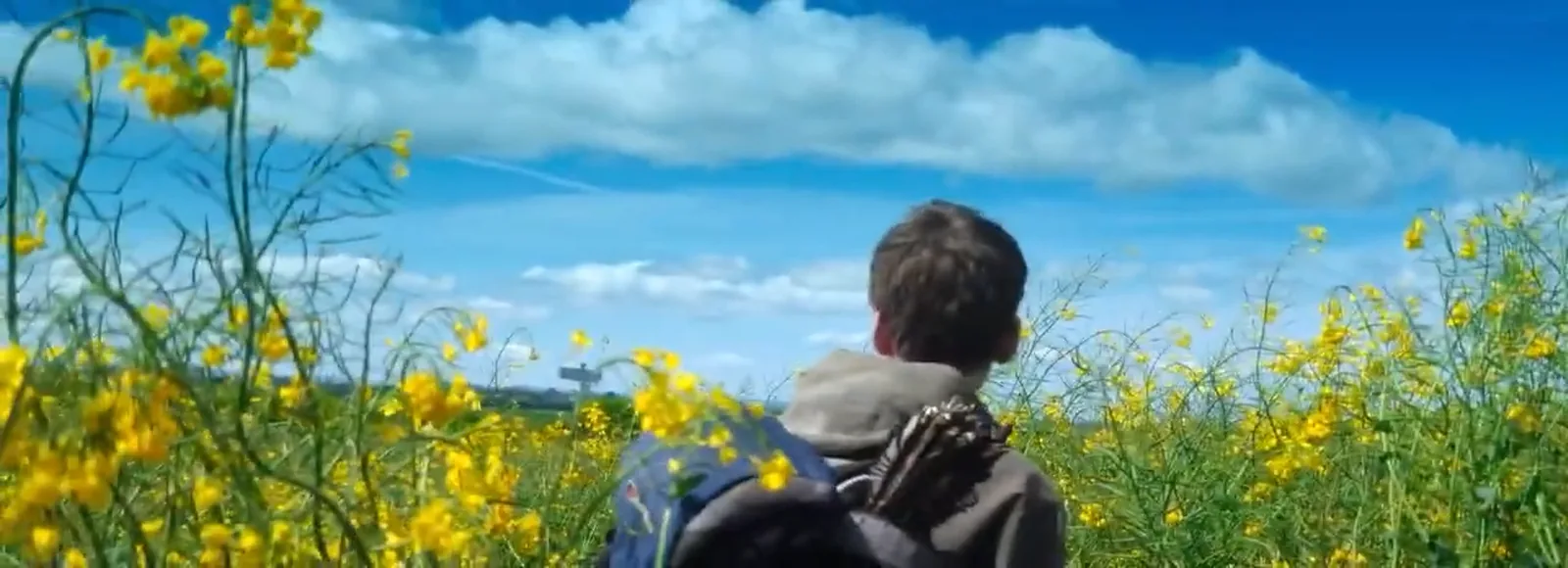
What the island setting also does is show very clearly that abandoned in isolation, Britain has fallen through time. As Isla asks when confronted with a memory of her father, when she and Spike encounter the still-standing the Angel of the North, “how many years have we fallen this time? Is it hundreds, or thousands?”. The theme of an Island fallen through time emerges at numerous points in the story, as we’ll continue to examine. Past the obvious allusions to Henry V, World War I and the Vikings, there is far more symbolism that lies under the surface of the two films.
Let us next examine some of the more esoteric influences on the film that appear to draw from a deep well of British history and folklore.
Wild Men, Giants and Ghouls
As Jamie and Spike explore the mainland, it becomes quickly clear that the infected have taken strange new forms after years of being left to adapt in the damp forests and urban jungles of post-apocalyptic Britain. The slow-lows manifest as bloated, crawling forms of pallid flesh, evoking imagery of trolls or goblins that dwell under bridges in many a folk tale.
The most interesting new development however are the Alphas, huge, hulking giants (with members to match) now roam the countryside and command packs of infected, like hunting dogs. Some of the Alphas have developed a passion for head-hunting, and can be seen claiming the heads of deer and people alike as trophies from their kills. At one point in 28YL, the Alphas are referenced as “Bezerk” or Bezerkers by Eric, the stranded Swede, another nod to the vikings that besieged the Holy Island as we referenced earlier, but these new rage-filled monsters appear to be inspired by other less-historic, more folkloric characters as well.
To state the absolute obvious to some, giants feature heavily in British folklore, and rarely can you pass a story in a folklore book without some kind of giant that’s thrown a rock here or been bested by a hero there. Jamie even refers to Spike as “giant killer”, evoking the Irish tale of the same name, where Jack the Giant Killer faced down against an enormous wild boar that was terrorising his hometown, ultimately slaying it but crippling himself during the battle. Spike’s journey to the mainland, resulting in his return hailed as a “giant killer”, continues to build the mythological framing of the narrative without directly paralleling any particular folk-tale, and seats him firmly in the centre as the hero of some old tale.
The script drips with little nods like this to, presumably, the old archetypes that acted as inspiration for the Alphas, and how they indicate Britain’s return to the mythical land of Albion. Being club-wielding (or should I say head-wielding) giants with enormous man-parts, they could also be inspired by hill figures like the Cerne Abbas Man and the Long-man of Wilmington (less well-endowed). I can certainly see the similarities. They also resemble the Wild Man of European folklore, who was often considered to be a forest-dwelling man-hunter:
“Generally they are considered a large-statured race of humans who are hairy all over their body, and live in the wilderness or woodlands. They are often thought to be covered with moss, or wear green or vegetative clothing, and iconically wield a club or hold an uprooted tree as a staff.”
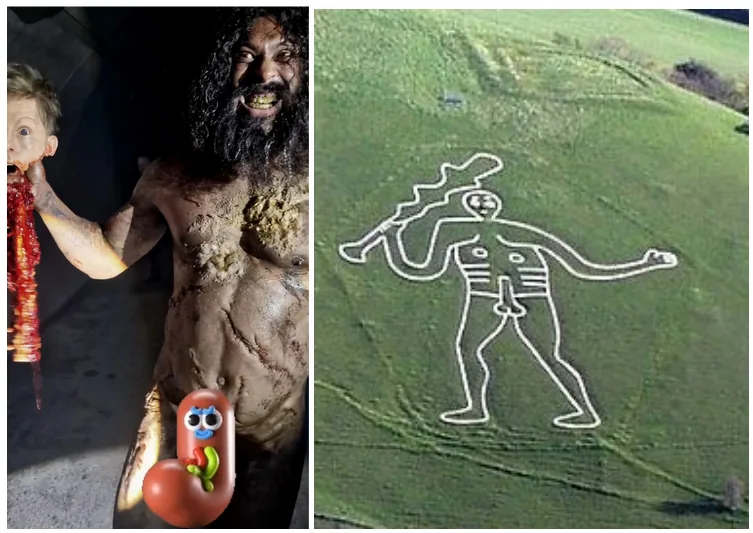
The Alpha’s head-hunting practices evoke those of the Celts, who were said to decapitate their foes and display the heads along the walls of their settlements, or to throw the heads, which they believed contained the soul of their victim, into a body of water (which is potentially where our tradition of throwing a coin into water for good-luck comes from! Most coins still display a head on them after all). Heads and skulls play a central part in the iconography of the 28 Years films, with Alphas using them as trophies and weapons.
Here we have a set of central antagonists who represent an amalgamation of different historic and fictional giants. They are the mythical giants of the old tales, to be slain (or tamed?) by our heroes, carrying with them another echo from the past. They are a perfect example of the ancient-future: a force of nature both inspired by ye olde stories of giants, as well as the very modern post-covid realisation that pandemic causing viruses can eventually evolve to be less harmful to their hosts, creating unpredictable new variants (in the form of both the Alphas and the slow-lows).
Next, we’ll explore the character of Dr Kelson, who, as we find out, is also a sort-of head hunter, but for markedly different reasons.
Dr Kelson, the Bone Temple and Neolithic burial rites
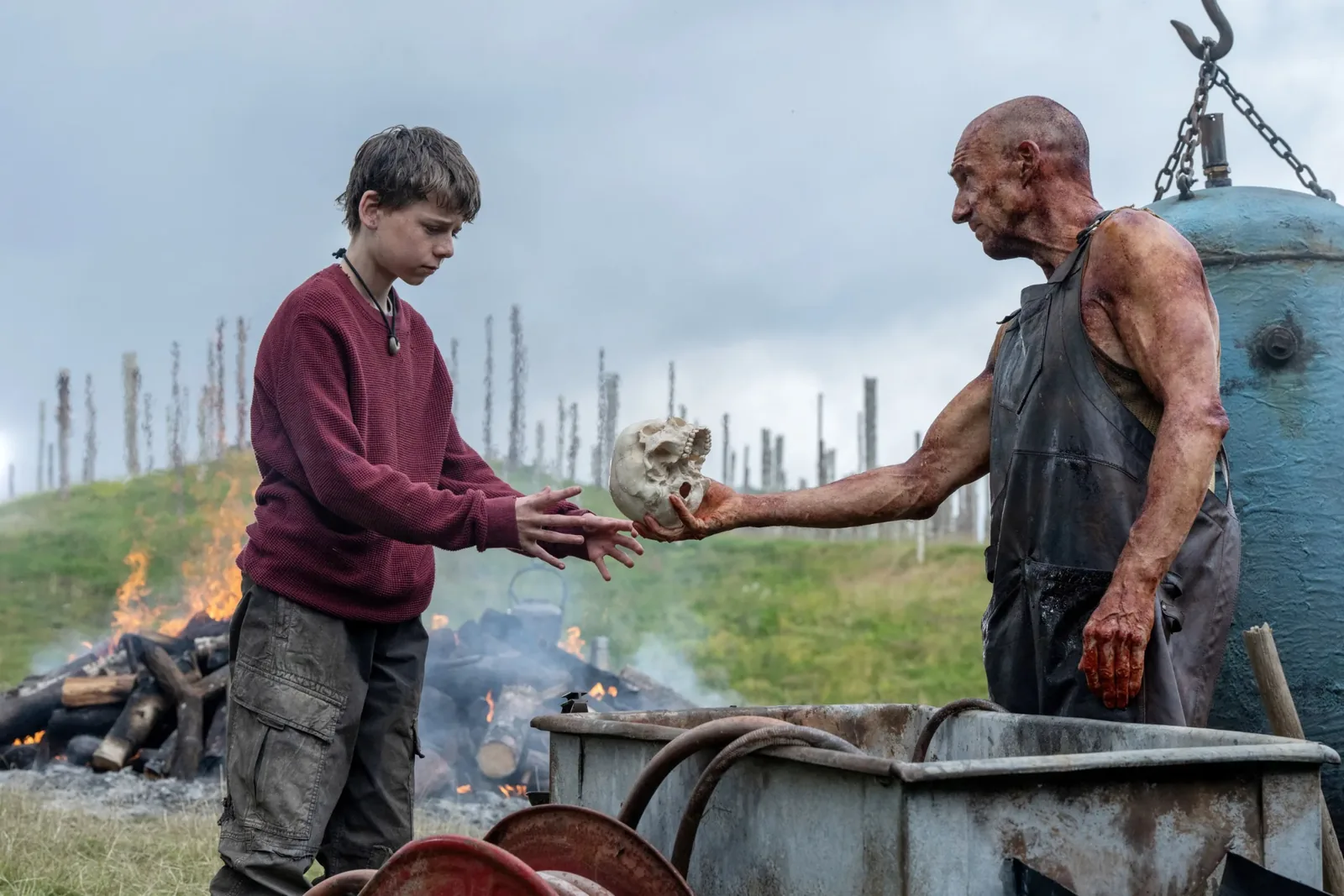
As Spike crosses the threshold stage of his heroes’ journey, he encounters his supernatural aid or mentor, in the form of Dr Kelson. Kelson has spent a good part of his apocalypse building an ossuary, or bone temple (dare I say Bone-henge?) to commemorate the victims of the rage virus epidemic, infected and uninfected alike, “because they are alike”.
During interviews, Alex Garland said he was inspired by 911 and covid memorials when coming up with the idea of the bone temple. These are contemporary constructions built from stone or concrete, with the names of the dead written on them. In the case of Kelson’s monument, there is no concrete, there are no names, all are equal in the face of death and as such the bleached eye sockets of the dead stare out onto the landscape, no hint of whether they perished with a sound-mind or one plagued by virally induced psychosis. Kelson has built something that touches both our recent past and also the ancient traditions of the British Isles, with his structure actually having more in common with a neolithic burial site than the two memorials that Garland lists as inspiration.
Once again we see an ancient thing bubble up to the surface in our post apocalyptic hauntological version of Britain, Kelson manifesting as a Merlin-like archetype for Spike’s Arthurian journey. We also see the good Doctor painted head-to-toe in iodine, possibly inspired by the Celtic practice of painting themselves blue with Wode.
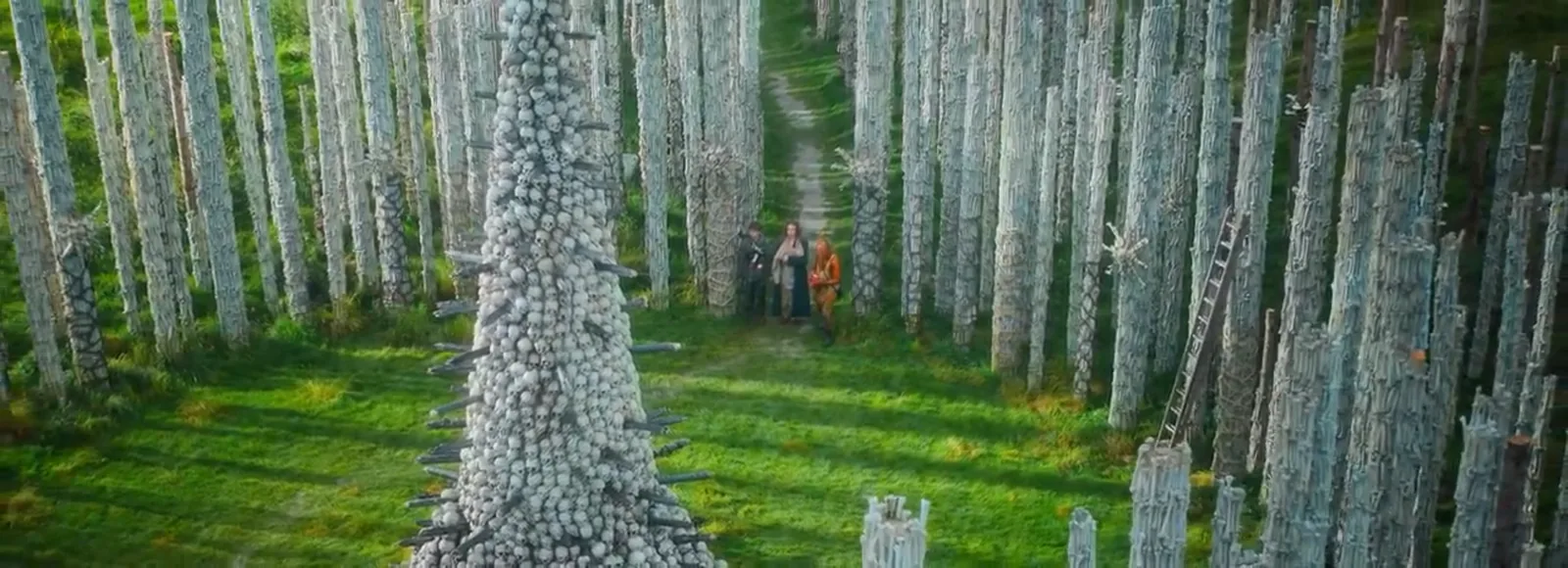
Kelson’s henge is a large circle made of wooden pillars, with bones decorating each pillar with meticulous placement and care. Britain is known for its stone and wooden henges, Seahenge and Woodhenge being prominent examples of large circles that were constructed specifically from timber around 4000 years ago. It is thought that our henges had a ritual function, my favourite description of this being put forth in the book Britain BC by Francis Pryor, where henges are thought to exist in a liminal space between the realms of the living and the dead. From the moment our characters first cross into the temple, it is clear that this space is also one of liminality, with some of the most surreal sequences of both films taking place within it.
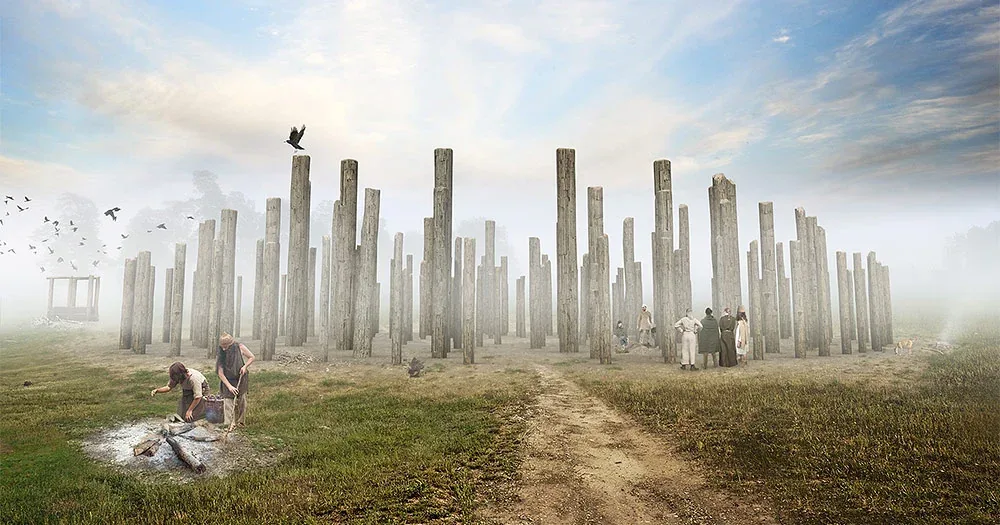
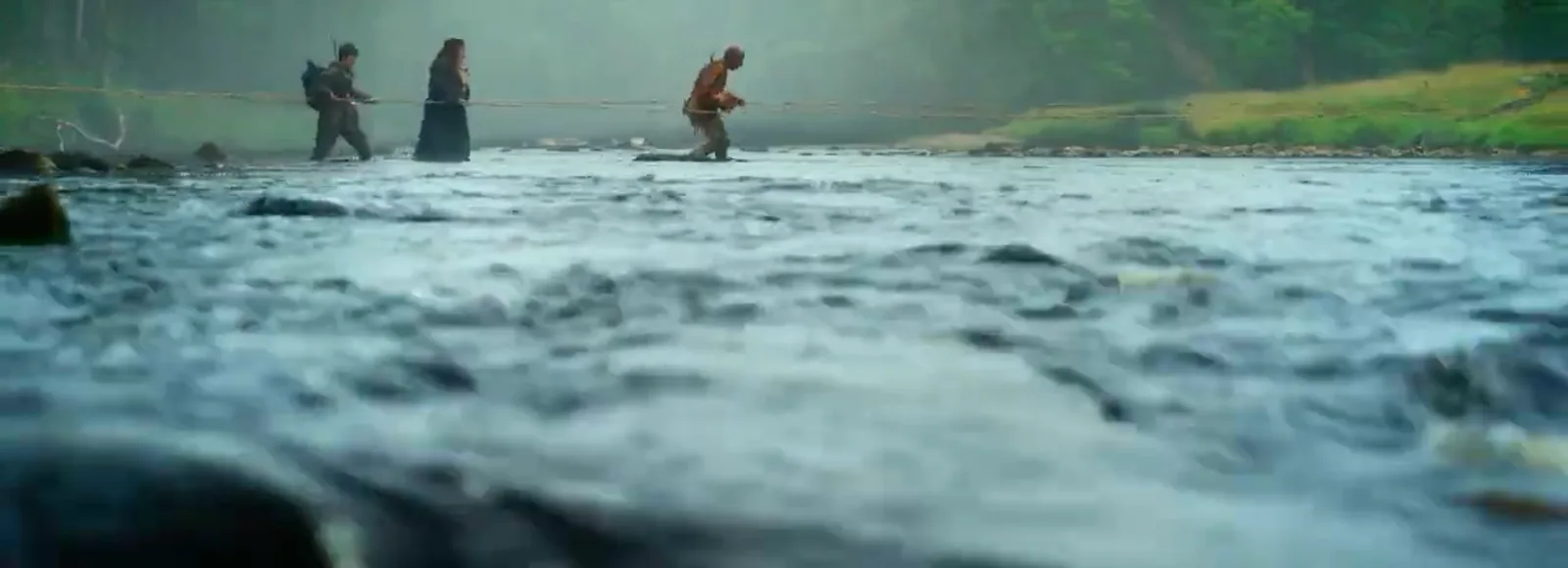
The liminality of Kelson’s henge is further highlighted by its location next to a stream. Francis Pryor points out in his book that many of our real-life historic henges were positioned by bodies of water, the crossing of which could have represented a ritual purification and the transition into the realm of the dead. Sure enough, Spike and Isla cross the stream before entering the temple, where [MAJOR SPOILER, YOU WERE WARNED] Isla is diagnosed and ultimately agrees to end her life. The stream keeps the infected out, who seem unable to pass it, adding to its almost magical protective quality. Interestingly, Samson is not seen entering or interacting with the stream until his own “purification” at the hands of Kelson during The Bone Temple.
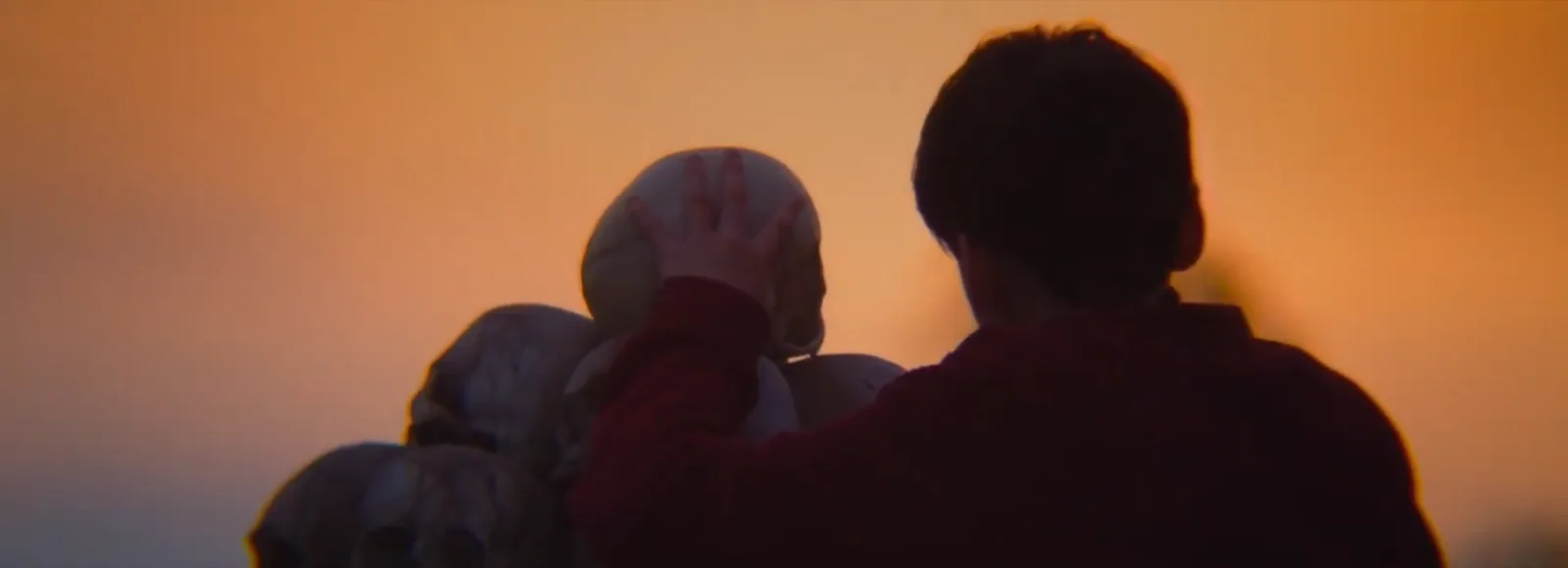
Despite being an atheist, Kelson has become the high-priest of a monument that draws on thousands of years of neolithic religious practice and ancestor worship, where the bodies of deceased relatives were excarnated (the flesh removed) and placed, communally, in parts of henges and long barrows. Excarnation, the ritual cleansing of the bones, was potentially seen as the final process of the soul leaving the body. We see this happen twice, once in grizzly detail with Eric (his remaining flesh washed down into the purifying stream), and with Isla, allowing Spike his own Memento Mori moment. Placing his mother’s skull atop the central pillar of the henge and setting its eyeless gaze towards the rising sun, once again we see a hint of neolithic ritual practice, with the combined association of commemorating deceased ancestors while observing a celestial occurrence from within the ossuary.
Old Nick and the Superstitious Chavs
At the end of 28 Years and throughout the Bone Temple, we are introduced to the Jimmy cult and the story switches to focus on their interactions with Spike and Kelson. The surreal, mythic feel of the Bone Temple is certainly lesser than in 28 Years part 1, but the narrative DNA continues through Alex Garland’s script, and as such the thread of British hauntology carries through into this film also.
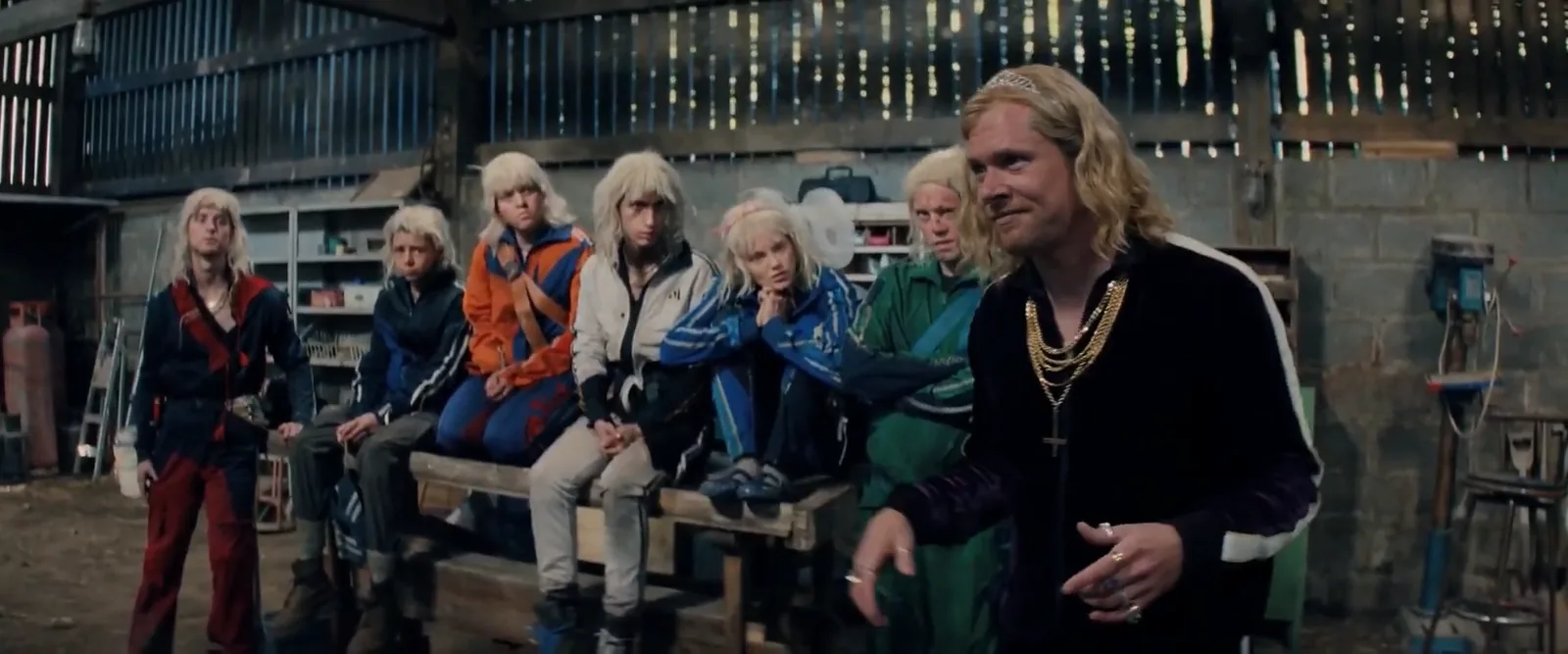
The Jimmy gang’s outfits are of course a direct reference to a certain British media personality/sex criminal of the same name. Far from drawing on the distant past, this is an echo from the not-so-distant 1980s, directly influencing the look and dress of our new cohort of tracksuit clad villainous oiks.
Like many of the background influences of the 28 Years films, the appearance of the Jimmies is never directly mentioned and only thematically or visually alluded to, once again adding to the feeling that in this universe, the historical and mythical echoes have rippled to the surface, with the initial virus outbreak acting like a large boulder hitting the bottom of a deep lake, stirring up long buried sediment carried upon the waves of the impact.
We see a strange new world where giants exist, atheist druids build neolithic mortuary enclosures, and chavs dressed like a combination of Jimmy Saville and the Power-rangers roam the countryside sacrificing good-folk to Old Nick/the Devil.
It is the superstition of the Jimmy cult that I wish to examine further. I have heard commentary by certain people (mainly Americans) criticising the Jimmy’s Devil-worship as cliche and unimaginative, however, I argue that this superstition yet again reflects a long history of folklore that emerged in Christian Britain. Considering our nation has been predominantly Christian in one form or another for nearly 2000 years, there is an immense span of time that has allowed myths of God, Saints and Devils to emerge in local and national tales.
Reading my copy of Folklore, Myths and Legends of Britain as I travel round new places in the UK, so far there is not a single region I have visited that does not have its own Devil myths. For instance, there are multiple hills in the UK that share the same origin story: The Devil, on his way to a nearby town to dump an enormous sack of rocks and rubble on the unsuspecting residents, met an old cobbler on the road to his destination. The Devil asked the man how far the journey was to the town. The cobbler, being an old decrepit man with a long white beard and with a collection of worn out shoes hanging from his cart, explained in anguish
“I set off to that town when I was but a young man with no beard at all, and look at all the shoes I have worn out in my journey to reach it!”
Rather discouraged by this news, the Devil decided to give up and deposited his rubble sack just outside of the town. This myth is associated with the creation of Cley Hill in Warminster, as well as other hills elsewhere (I have also read a version, bizarrely, featuring Robin-Hood and Little John as substitutes for the Devil in the story).
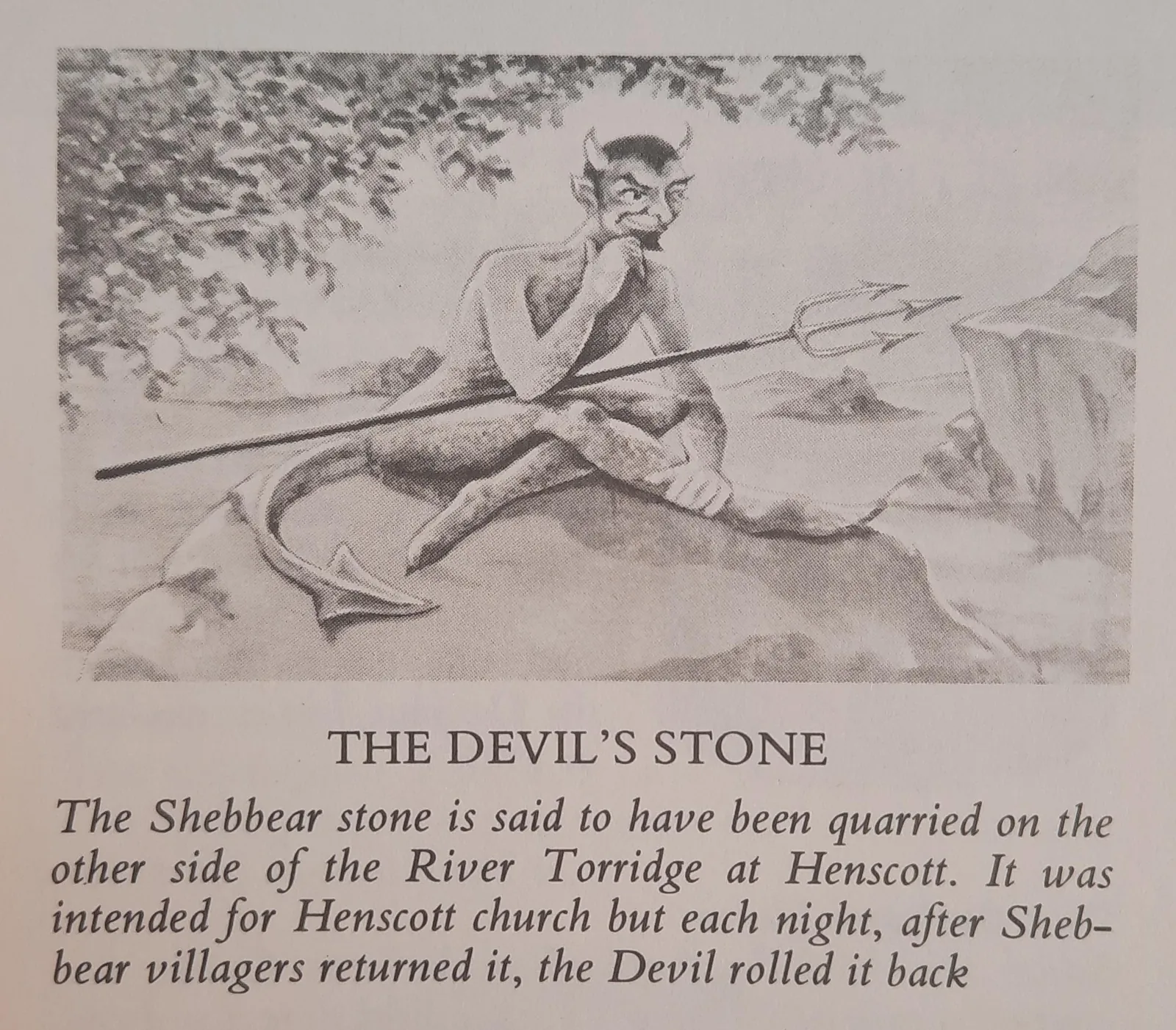
We have multiple places named the Devil’s Chimney (in both Cheltenham and Sligo, Ireland), a Devil’s Pulpit in Tintern and many, many, many more places, myths and superstitions related to Old Nick himself (throwing salt over one’s shoulder into the eyes of the Devil, don’t pick blackberries after September as the Devil will have gotten into them, don’t burn Elder twigs or you may summon a Devil and/or witches). Hopefully this much-abridged list successfully demonstrates how embedded these superstitions have been in the national consciousness in the UK (even in our more secular/multifaith modern-day).
Given the examples and given the narrative themes we have discussed, I think it would have been strange to have the Jimmies worship any other mythological character. It is also fitting then, given our story of how an old cobbler outsmarted the Devil, that our Sir Jimmy Crystal should meet his demise in a similar way.
Kelson, our Merlin figure, outsmarts Jimmy, our Devil figure, by calling Jimmy’s bluff on his claim to be the immortal son of Satan and asking him to voluntarily accept crucifixion at the heart of the bone temple as proof of his immortality (another interesting image, the combination of Christian and older, pagan imagery woven together in one scene, something often present in British folklore). The besting of a Devilish character through wit is a common theme in folk-tales, carrying through the mythic thread that was more obviously exposed in the previous film.
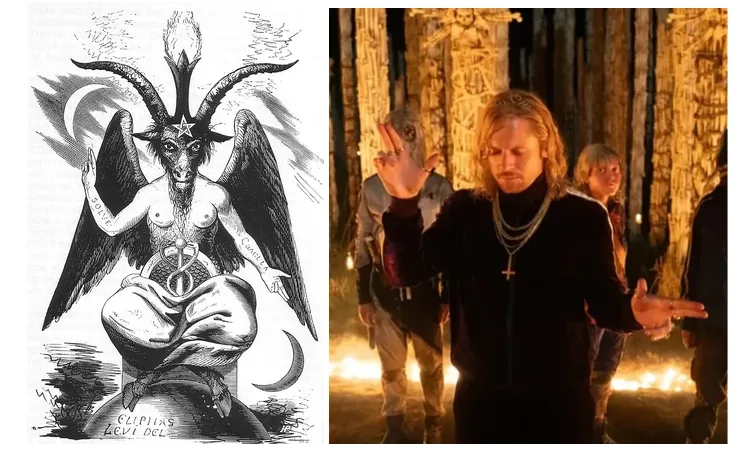
The specific use of an archaic name for the Devil, “Old Nick”, is another allusion to this superstition drawing on a more ancient source and keeps us in the framing of a post-apocalyptic legend, with Crystal also striking the pose of the Baphomet (supposedly worshiped in the 14th century by the knights Templar, and portrayed most famously by the drawing below, produced in 1856) to communicate with his “father”. The Jimmies’ medieval, almost peasant-like, unquestioning belief in such literal manifestations of Satan further reinforce this, although seeing Kelson painted red with iodine and dancing with “one of his demons” in a temple made of skulls, perhaps we can’t judge them too harshly!
Final Thoughts
Perhaps I read too much into the themes explored in this piece, perhaps I didn’t. I haven’t read Alex Garland’s 28 Years Later script, which may shed more light on the intent behind certain set pieces and characters. I do believe that there is so much to analyse in these films, that the associations cannot be purely coincidental. I believe these new 28 films were written to be a post-apocalyptic folk tale, and more literal analysis of the films (and their “plot holes”, a term I have come to hate due to its overuse) is not best-placed.
Whether they realised it or not (they’re clever people, so I’m sure they did), Garland, Boyle and Da Costa have created a set of films that beautifully draw upon Britain’s rich history of ritual, myth and folk stories, with archetypes and imagery springing up in post-apocalyptic Britain from the great well of the nation’s collective unconscious.
We have examined Viking invasions, giants, hill figures, Celtic head-hunting, neolithic funerary practice and Devil myths. Few other films have given me so much to chew on from a personal interest standpoint.
Whether these themes will continue into the final film of the trilogy, I cannot say. I certainly did not expect a great deal of the style and story that these films have put to screen, so I am sure we will be equally surprised by the direction of the third installment. With Danny Boyle set to return, I hope we see more of the Holy Island community and more off-the-wall, dreamlike directorial and editing choices, keep it weird please!
I am crossing my fingers that filming for part 3 goes ahead as planned in 2027. Perhaps I will revisit this article, or write a follow-up, after the third installment.
That’s all for now, Howzat!